CALENDAR
February 2026
Our Legacy
Calendar
February 2026
Welcome to Our Legacy Calendar — a monthly newsletter where we take a step aside from the everyday and dive deeper into the ideas, people, and processes that shape our world. Each month we share articles, interviews, and conversations with friends and collaborators, alongside personal reflections, recommendations, and small discoveries worth passing on. Think of it as an ongoing archive: a space to slow down, to read, and to connect with the voices and perspectives that inspire us.
Close-up with Tish Weinstock
Late 1969, on the brink of a transformative decade for Hollywood, Interview Magazine’s inaugural issue was launched in true Warholian style. A provocative portrait of Agnès Varda and the cast of her experimental film about the assassination of Robert Kennedy, Lions Love, which paved the way for many iconic covers to come.
I’ve previously written about Glenn O’Brien’s enormous contribution to Interview and beyond - so why am I turning back time yet again? (Please note my uncanny reference to Cher’s 1989 single, "If I Could Turn Back Time".) I’ll explain “The Why?” soon…
Co-founded by Andy Warhol and journalist John Wilcock as a ‘Monthly Film Journal’ (or as Warhol articulated: “A way to get into parties”), the publication went on to become a cornerstone of the glittering celebrity culture that permeated Hollywood at the time.
So many fashion labels have commemorated the enduring and exhilarating legacy of the publication Warhol referred to as “The Crystal Ball of Pop.” Pop, like fashion, can be a medium for any type of expression at any given moment. Whether you want to talk about clothes or not, fashion allows the “anything” and the “everything.” Somewhat reminiscent of Factory Records founder Tony Wilson's occasional dictum: “Pop is the art of the playground.”
Back to Warhol and Interview… From his prepster jeans, blazer, and tie uniform in the formative days of The Factory, to wearing Comme des Garçons (which evoked his dear friend Jean-Michel Basquiat’s adulation for the Japanese label) and Helmut Lang, to the fame-obsessed vision of 1970s Los Angeles that manifested America’s second gilded-age, or a time when omnipresence was provocation. The man saw no boundaries, rejected snobbery, and opened up the floodgates to everyone who sought what he referred to as their: “Fifteen Minutes of Fame.”
Emerging at a pivotal moment in American culture, Interview’s unconventional format was a radical reflection of a time when the intersection of art and cinema transformed the film industry. The magazine’s candid celebrity-on-celebrity dialogues became a conversational touchstone for a decade defined by the birth of the blockbuster era. As movies such as The Godfather, Star Wars, and Saturday Night Fever were drawing global attention, Interview offered a rent-free window into the lives of the stars shaping the cultural zeitgeist. Warhol’s vision for the magazine echoed his own obsessions with fame and the power of media. He rejected the polished narratives of mainstream publications and formed a new authenticity – one that blurred the boundaries between public personas and personal lives.
Over the decades, Warhol’s influence transformed the celebrity magazine into an object of art: each issue captured his spirit of reinvention and avant-garde glamour. From 1972 until the end of his life, he worked closely with artist Richard Bernstein to immortalise the likes of Cher, Mick Jagger, and Grace Jones on the cover: “He makes everyone look so famous,” Warhol previously said.
Today, Interview under editor and stylist Mel Ottenberg, continues to influence how we perceive fame and its role in culture. Alongside the unfiltered lens of social media, it maintains a raw approach and sets a new standard for how media can engage with stars and offer an authentic point of view. People's professional and social lives have merged into one exhilarating, celebrity-packed mission to penetrate the heart of what makes art, power, fame, fashion, politics, pop, and high society tick. Interview’s world has been one inhabited by Factory freaks, downtown artists, industrialist billionaires, European royalty, heads of state, ladies that lunch, and those still disco-dancing at dawn. Not much has changed thanks to Ottenberg.
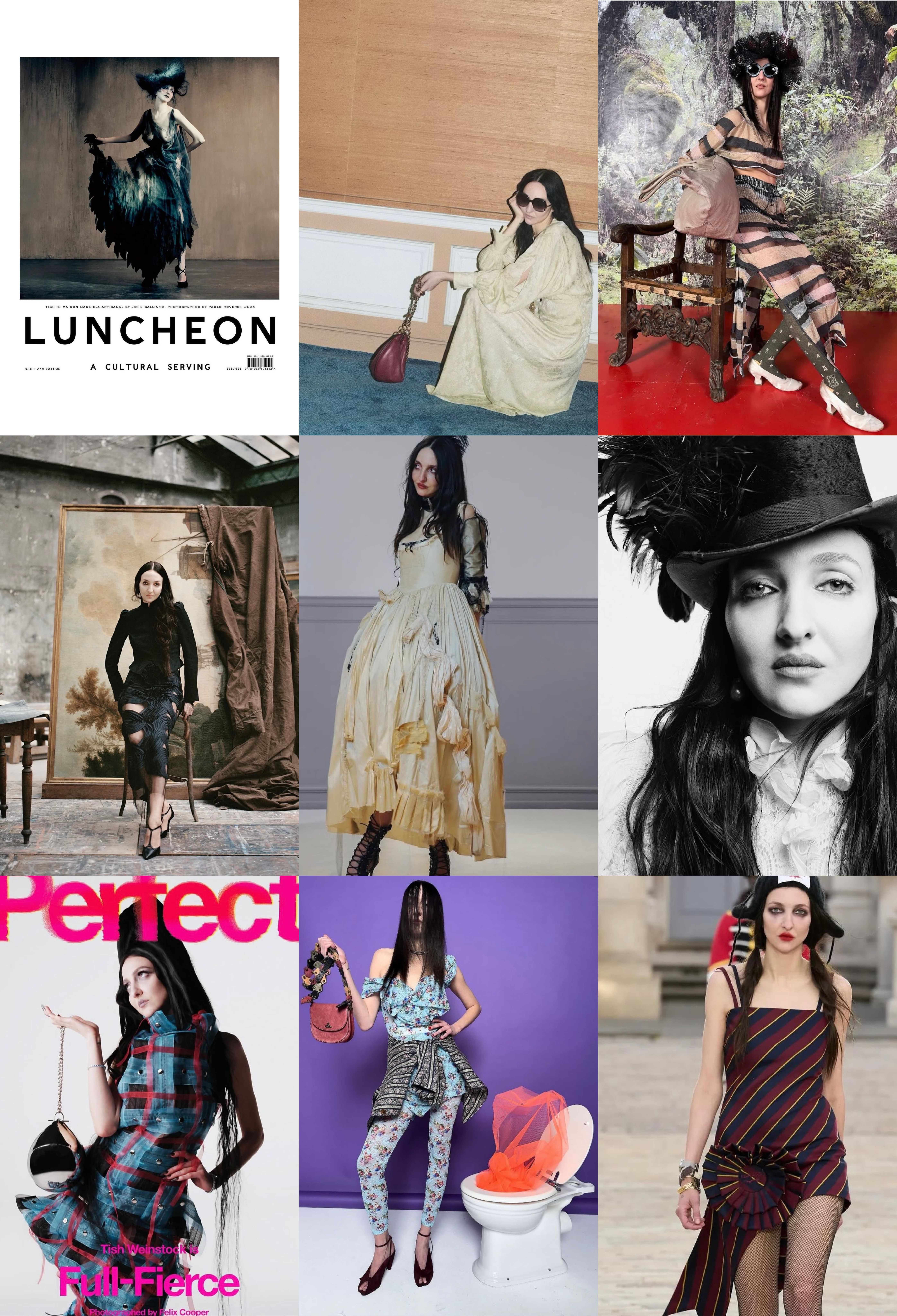
Oh yeah - “The Why?” I wanted to interview someone who consolidates her personal and professional life openly and honestly. Someone who is unafraid of dressing up when most people today look like a clone, or cypher of someone else. Someone who doesn’t hide behind the lens (whether it’s Juergen Teller’s, Paolo Roversi’s, or her own), rather someone who embraces the zeitgeist. Most importantly someone who doesn’t behave like a “society swan” but rather someone (like Warhol’s “everything goes” vision for pop) can do it all without looking back. So, I sat down with my former colleague, friend, and editor (think publications such as Vogue, System, i-D, and Interview) Tish Weinstock to discuss a bitesize interpretation of culture and couture amongst other things.
Q&A
Rahim Attarzadeh: You split your time between your work which involves a lot of travelling, and your family. How do you manage to reconcile these two aspects of your life?
Tish Weinstock: I constantly feel like I’m torn between the two, and yet if I didn’t have one, the other would probably suffer. They both give me a sense of purpose, identity, grounding, and escape.
Rahim: What do you love about fashion? Do you think elegance and sex appeal are artistic expressions?
Tish: I love how wearing clothes can alter how you feel. Whether that’s strong, sexy, soft, or cool. Or however else you want to identify. I also love being moved by the artistic expression of a show or fashion image, even if I am less interested in wearing the actual clothes.
Rahim: If I’m not mistaken, you are particularly passionate about art. Do you think that there’s a strong link between contemporary art and fashion today? Should those lines be so blurred?
Tish: Personally, I’m less interested in clothes that reference contemporary art, especially if it’s a collaboration, but I can appreciate its cultural value.
Rahim: What kind of woman do you imagine yourself to be? Do you think everyone can come up with a personal style based on a personal dream? You’ve managed to create an image for yourself that is based on a singular and autonomous way of dressing.
Tish: I think personal style is fluid, as women are multifaceted. Sometimes I like to dress like a grand high witch bitch. Like the Tom Ford YSL era. Very vampy and quite severe. Other times I like to be soft and romantic with a Galliano slip or barely there '30s lace.
Rahim: What is your personal dream, or unrealised project?
Tish: Still figuring that out. I'm quite into the idea of being in a writer’s room on a TV show. That feels like it would be a lot of fun.
Rahim: When you were growing up as a young woman, did you have any mentors who inspired you?
Tish: Holly Shackleton was my first editor at i-D. She taught me everything I know. I was also inspired by writers like Dean Kissick, Clive Martin, and Bertie Brandes, who were also working for i-D and Vice at the time. It was a very formative period for me.
Rahim: You’ve previously said: “I think light and dark are part of the same thing. You can’t have one without the other.” At what point were you first drawn to a sort of darker aesthetic?
Tish: I’ve always been interested in the dark edges of things, the unknown, the mysterious, that which we can’t explain. It’s more exciting and it just appealed to my macabre, slightly sad girl sensibilities. I was a bit of a shy, sad kid growing up and always identified with the freaky goth girls on screen.
Rahim: Yohji Yamamoto referred to the “many different tropes of black.” It is the only colour that can protect and project you simultaneously. Almost like armor. With this in mind, who would you say are your gothic heroines?
Tish: I love Edith Sitwell, Morticia Addams, Theda Bara, and Luisa Marchesa Casati. All unapologetic women who rage against the machine and have a flair for the macabre.
Rahim: In the creative industries, I think it’s really important to accept and embrace the fact that you are alone and you can be small and meaningless. From that point, you can grow and develop your own sense of enigma. Would you agree?
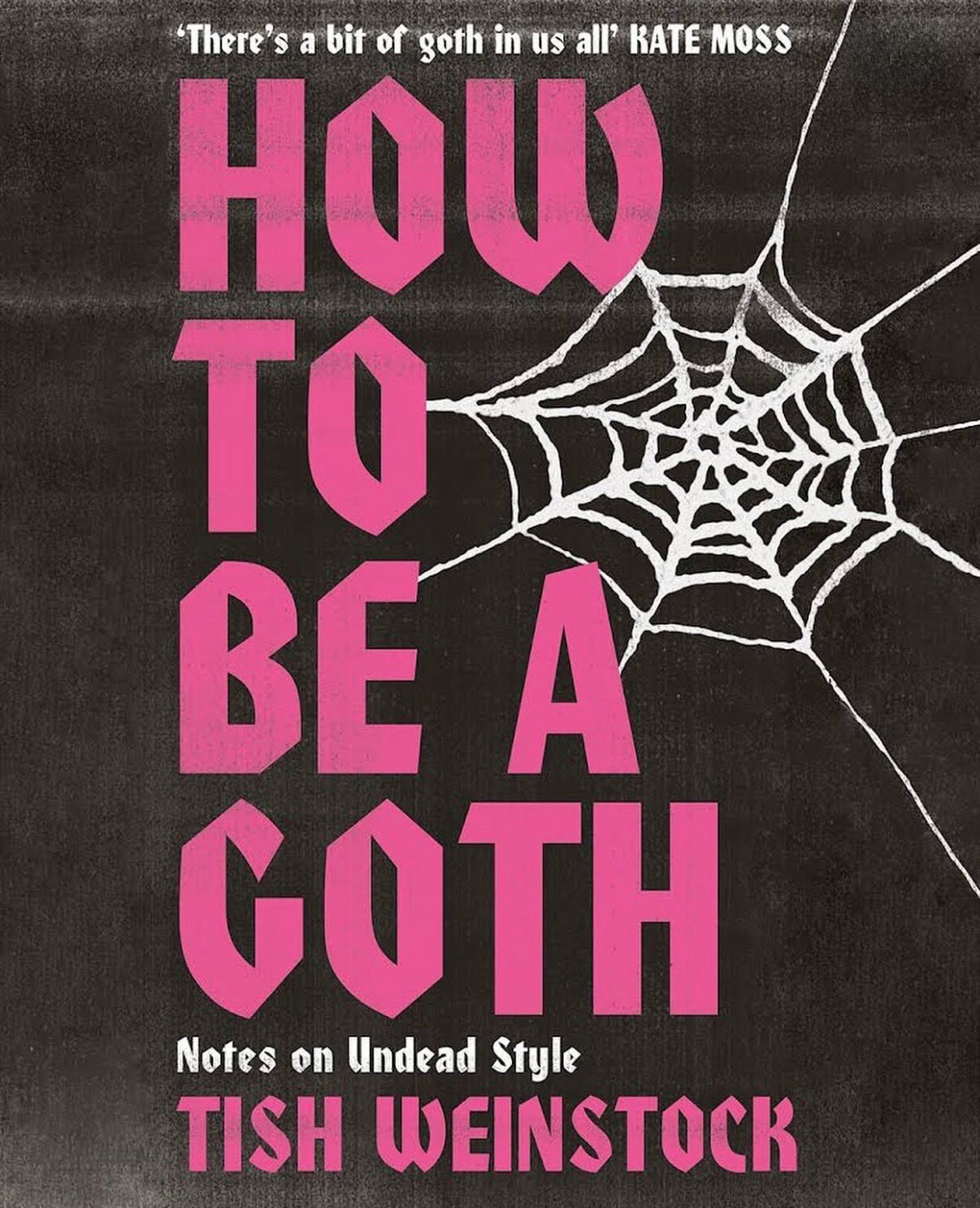
Tish: I don’t think I am very enigmatic. I post pictures of my kids on Instagram and write intimate and unhinged details about my questionable gut health on Substack [entitled: "I'm sick, *coughs*".] If anything I should be more enigmatic! But I agree with you that fashion can make you feel small and irrelevant.
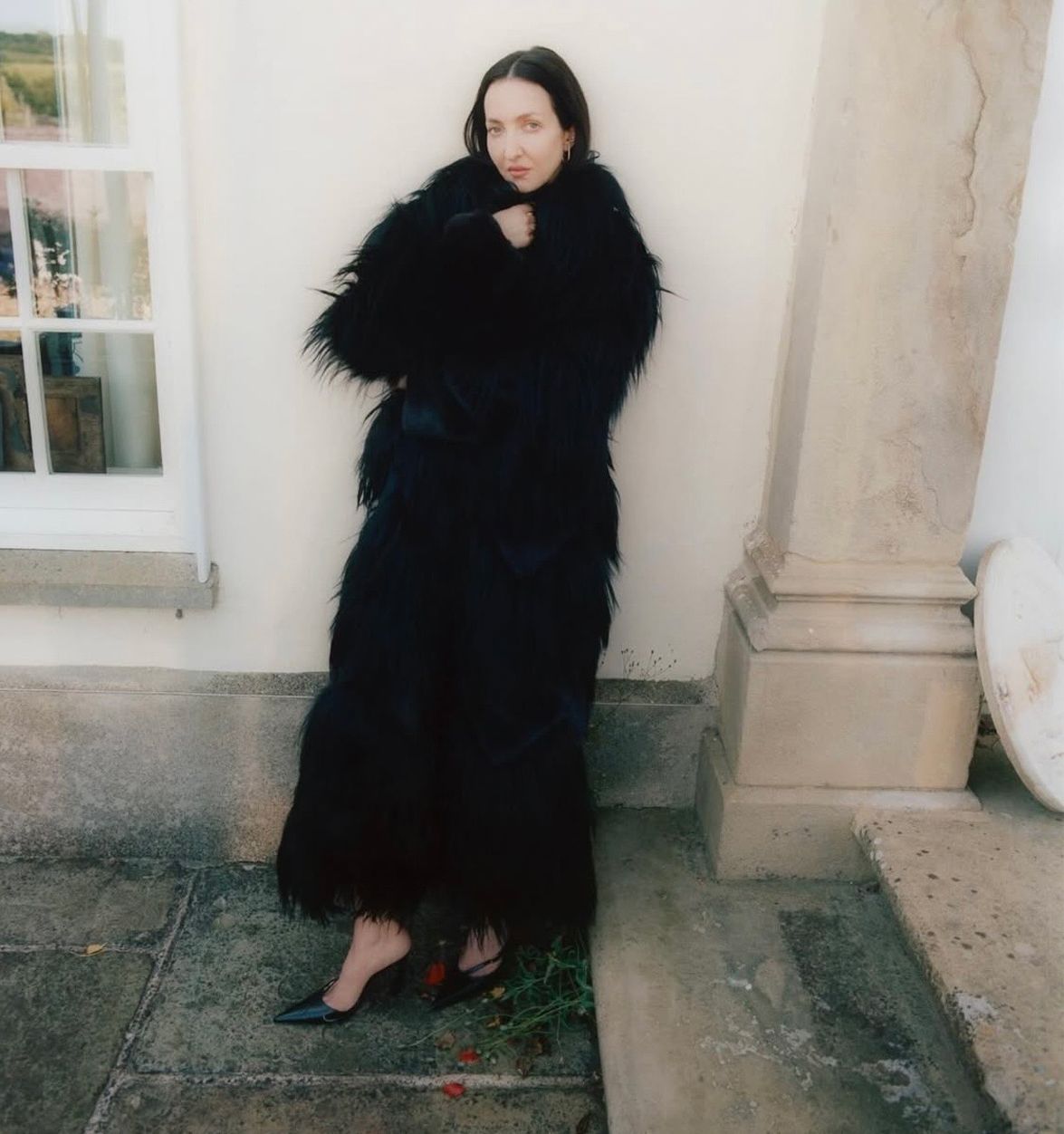
Rahim: Something I’ve noticed is that you don’t really wear jeans. I think that can be a good thing. Do you find wearing jeans is a sort of horror, or a declaration of the act of “giving up?”
Tish: I just find jeans so exposing and I don't feel like myself in them. They’re the most ubiquitous clothing in the world, and yet wearing them makes me feel like a freak. I can't explain why. It might change one day.
Rahim: When did you first meet John Galliano prior to him making your wedding dress? What attracted you to his work beyond his legacy? I think the nonchalance in which you wear his designs resurrects a state of sartorial hedonism that we haven’t experienced since the 1970s.
Tish: I met him in 2022 at a Maison Margiela cocktail party in his studio. I love the decadence, romance, and theatre of his clothes, that I can put them on and become a character. His dresses are like armour for me.
Rahim: Importantly, you like to keep up with the younger designers. Connor Ives is an example of that. How would you like to see the fashion industry change its relationship with the independent designers?
Tish: I think the industry needs to support its young designers more. A lot of them have no idea about the business side of brands, and it’s why a lot of them fail.
Rahim: To finish, many people in the fashion industry seem to have stopped trying to build a career for themselves as they have become too busy maintaining a fictitious lifestyle. How you project yourself comes from a palpable degree of honesty and openness. What’s your advice to a young woman starting out in the industry today?
Tish: At the beginning of my career I worked like a fucking dog doing some pretty degrading jobs as an intern, but that’s what gets you noticed. Internships are crucial. It’s where you meet people at all different levels and build relationships, and it also helps strengthen your work ethic. It also helps you hone your skills and craft. My advice is to get as much experience as you can and meet as many people as you can. That’s how opportunities come your way.